
Communication & Expression
A Different Way of Seeing
Communication does not begin with words; it begins with relationship.
For many non-speaking autistic children, expression is already alive and fluent. It simply doesn’t always move through the mouth. When we shift from “How can I make them communicate?” to “How can I meet the communication that’s already here?” everything opens. This page is here to offer a wider lens, one rooted in safety, attunement, and coherence rather than deficit or limitation.
Your child is not waiting to become someone else.
They are waiting to feel safe enough to show who they already are.
The Foundations: Safety, Attunement, Coherence.
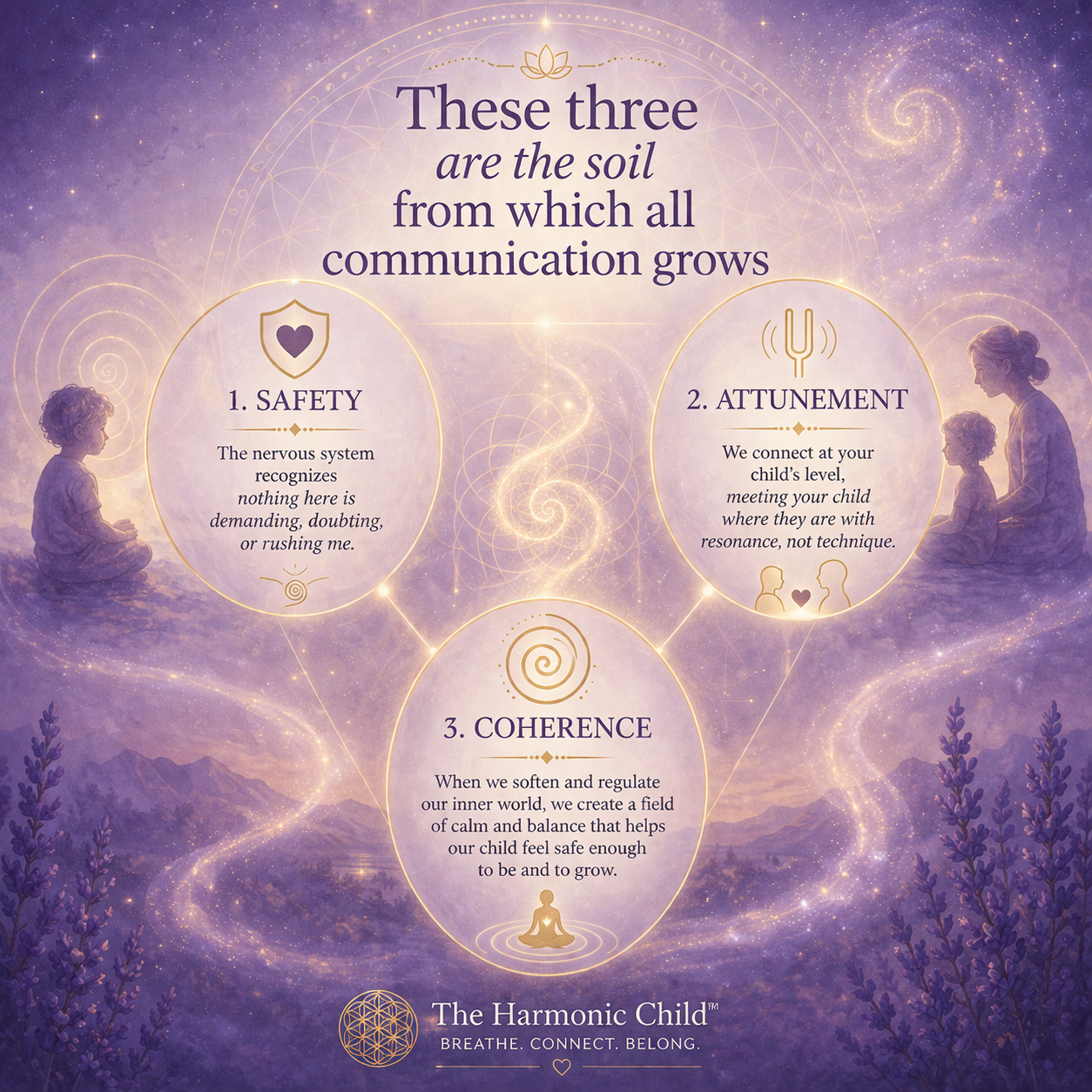
These three are the soil from which all communication grows.
Safety - Not the rule-based kind. The felt kind, the nervous system recognising “nothing here is demanding, doubting, or rushing me.”
Attunement - Meeting your child where they are, not where you think they “should” be. It’s resonance, not technique.
Coherence - A regulated adult creates a regulated field. When we soften inside ourselves, our children feel it instantly.
Before outward expression can rise, the inner world must have room to breathe.
This is the heart of The Harmonic Child. Everything else grows from here.
The Many Languages of Non-Speaking Children
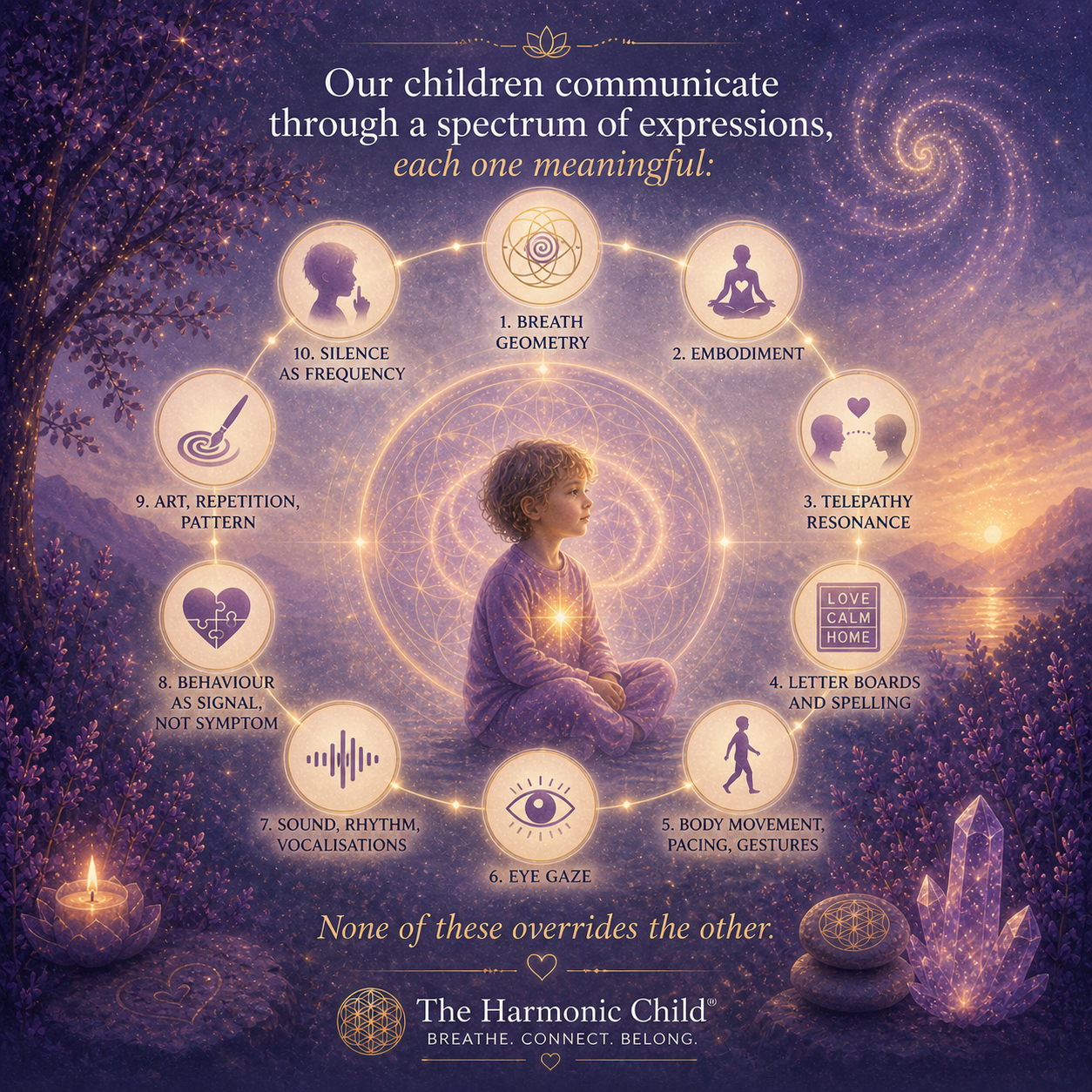
Our children communicate through a spectrum of expressions, each one meaningful:
Breath Geometry
Embodiment
Telepathy Resonance
Letter boards and Spelling
Body movement, pacing, gestures
Eye gaze
Sound, rhythm, vocalisations
Behaviour as signal, not symptom
Art, repetition, pattern
Silence as frequency
Expression isn’t something we choose for them. It’s something that emerges from the system they feel safest in.
A New Perspective on “Apraxia”
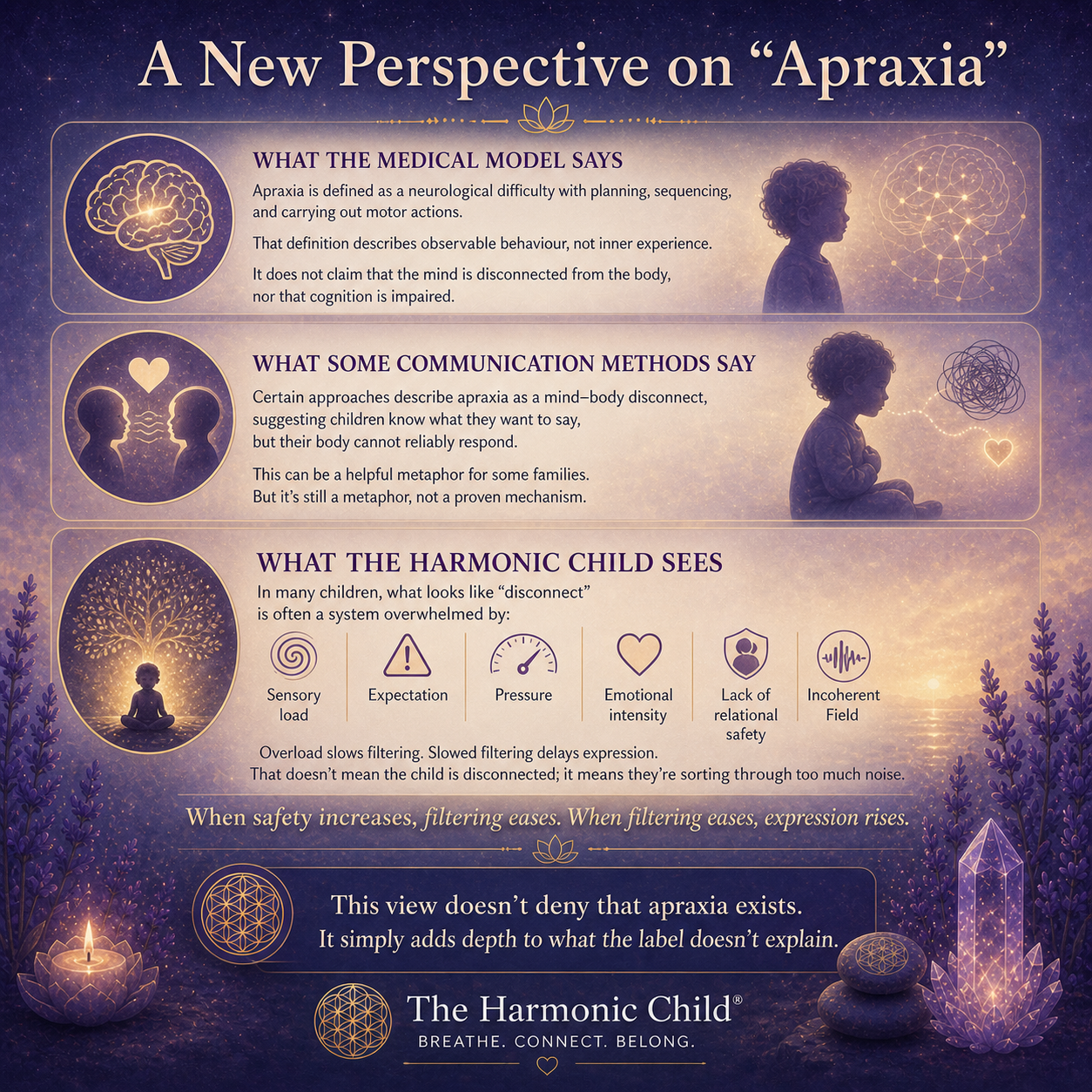
What the medical model says
Apraxia is defined as a neurological difficulty with planning, sequencing, and carrying out motor actions. That definition describes observable behaviour, not inner experience. It does not claim that the mind is disconnected from the body, nor that cognition is impaired.
What some communication methods say
Certain approaches describe apraxia as a mind–body disconnect, suggesting children know what they want to say, but their body cannot reliably respond.
This can be a helpful metaphor for some families. But it’s still a metaphor, not a proven mechanism.
What The Harmonic Child sees
In many children, what looks like “disconnect” is often a system overwhelmed by:
Sensory load
Expectation
Pressure
Emotional intensity
Lack of relational safety
Incoherent Field
Overload slows filtering. Slowed filtering delays expression. That doesn’t mean the child is disconnected; it means they’re sorting through too much noise.
When safety increases, filtering eases. When filtering eases, expression rises. This view doesn’t deny that apraxia exists. It simply adds depth to what the label doesn’t explain.
Why We Start With the Parent
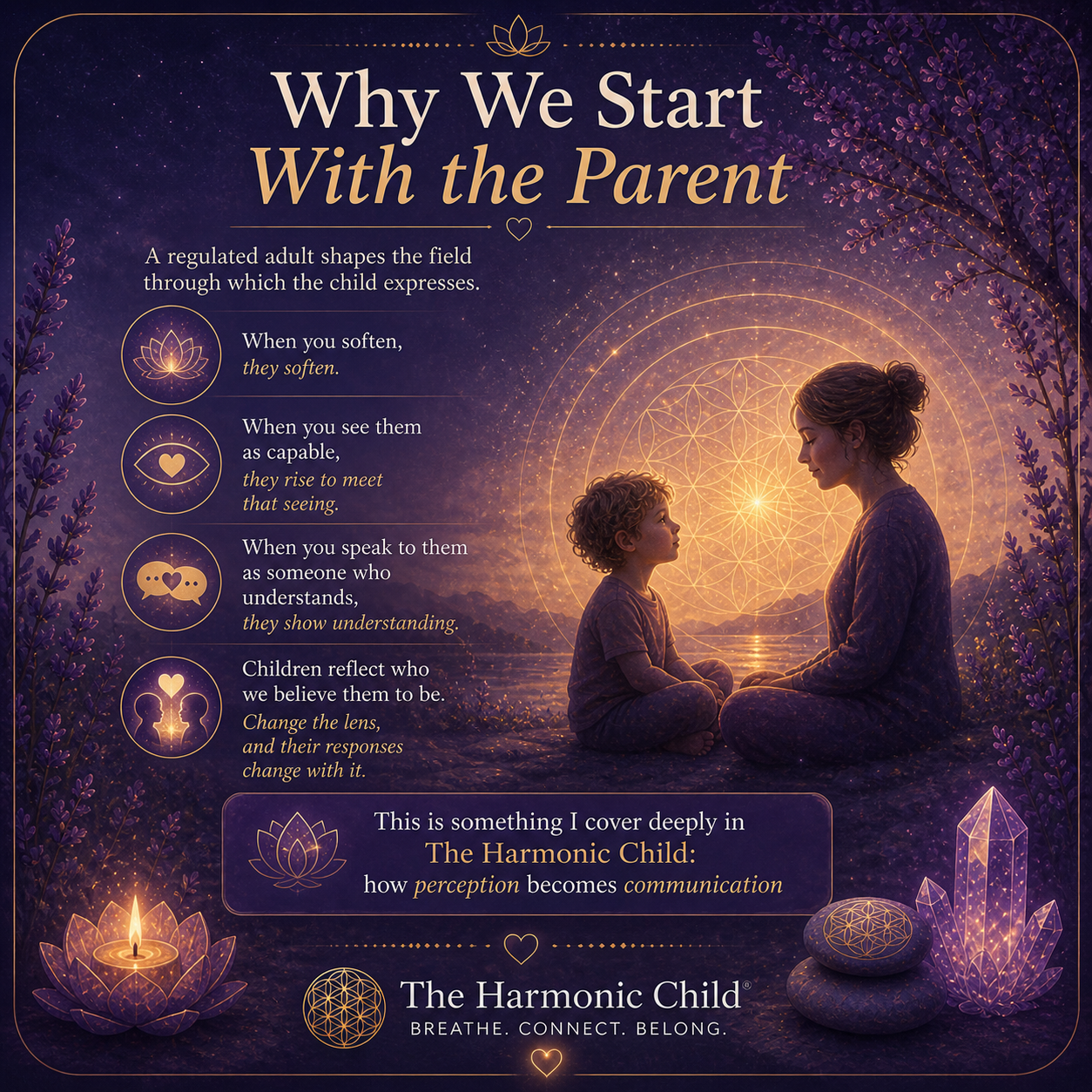
A regulated adult shapes the field through which the child expresses.
When you soften, they soften.
When you see them as capable, they rise to meet that seeing.
When you speak to them as someone who understands, they show understanding.
Children reflect who we believe them to be. Change the lens, and their responses change with it.
This is something I cover deeply in The Harmonic Child: how perception becomes communication.
Supporting Expression — Not Forcing It
Expression cannot be pulled from a child. It can only be welcomed. We don’t ask a flower to bloom faster by pulling on its petals. We change the soil, the light, the conditions, and trust the process.
You can expect to see more when you push less. You can expect clarity when there is room for the child to stay regulated.
Where Letterboards and Spelling Fit
These tools can be powerful when introduced through the right door. With safety and coherence beneath them, letter boards help organise expression that is already present. Without that foundation, they can feel pressured, perform poorly, or feel overwhelmed.
The method isn’t the magic. The relationship is. The safety is. The field is.
The Harmonic Child is not here to replace anyone’s method, only to deepen it.
For Parents, Educators, Practitioners, and Carers
This approach is meant for anyone supporting non-speaking autistic individuals, at home, at school, or in therapeutic settings.
You don’t need to master techniques.
You don’t need to “fix” anything.
You don’t need to choose between telepathy, letterboards, behaviour, or sound.
You only need to hold the conditions that allow expression to become visible.
Everything else follows.
Your child is not unreachable.
Not delayed.
Not limited.
They are already communicating in ways the world is only beginning to understand. Your work is not to make them more. It is to make room.